Start With the User, Not the Feature List
Reliable radio development begins with the job the product must perform. A warehouse user, field-service team and hospitality employee may all need push-to-talk communication, but their priorities for coverage, audio, controls, battery runtime and accessories can be very different.
The product team at QUANZHOU GLOHE COMMUNICATION TECHNOLOGY CO.,LTD. reviews the intended market, user profile, communication environment, frequency or network requirements and commercial position before narrowing the product concept. This helps prevent unnecessary features from distracting from essential performance.
Translate Market Needs Into Engineering Requirements
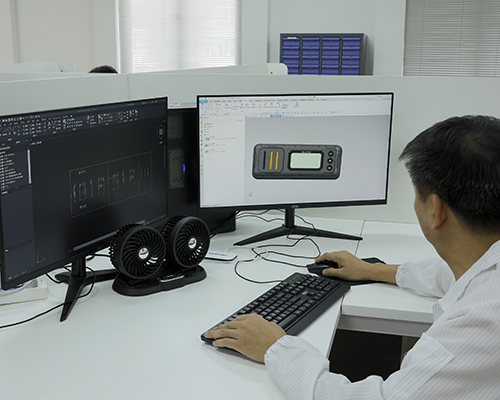
Once the use case is clear, product requirements provide a shared reference for industrial design, electronics, software, radio-frequency engineering, tooling, sourcing and manufacturing. Requirements may address enclosure size, control layout, display, audio, antenna, battery, charging, accessories and environmental expectations.
For an OEM or ODM project, this stage also defines which elements come from a proven platform and which require customization. Clear scope control helps customers understand the effect of requested changes on samples, validation, compliance and timing.
Prototype, Test and Learn
Prototypes make design decisions tangible. Engineering teams can review fit, assembly, interface behavior and component integration, while users can evaluate handling and operation. Problems identified during prototyping are more efficient to resolve than changes introduced after production release.
Validation should reflect the intended environment. Depending on the project, teams may review audio, coverage, charging, battery behavior, software functions, accessory compatibility, mechanical fit and user interaction. Test claims and certification must always be tied to the exact model and configuration.
Design for Production and Long-Term Support
A product is not ready for market simply because one prototype works. The confirmed design must be translated into controlled specifications, work instructions, test requirements, packaging, documentation and quality criteria. Engineering and manufacturing feedback helps improve repeatability before volume production.
After launch, field feedback can inform software updates, accessory planning and future product generations. This connection between market experience, engineering and production is central to building products that remain relevant over time.
Frequently Asked Questions
How long does radio development take? Timing depends on project scope, platform maturity, customization depth, tooling, validation and compliance requirements.
What should customers test in a radio sample? Evaluate the device in the intended work environment, including audio, coverage, battery, charging, controls, programming and accessories.
Can GLOHE develop customized radios? GLOHE supports OEM and ODM cooperation; feasibility and scope are confirmed through requirement review and engineering evaluation.